Across modern manufacturing, precision machining is essential for producing components that perform reliably under demanding conditions. Cylindrical parts such as shafts, rollers, bushes, and spindles require high dimensional accuracy and superior surface quality to ensure efficient operation and long service life.
A cylindrical grinding machine is specifically designed to achieve these requirements, making it an indispensable solution for manufacturers across industries including automotive, aerospace, heavy engineering, and general engineering.
What is a Cylindrical Grinding Machine?
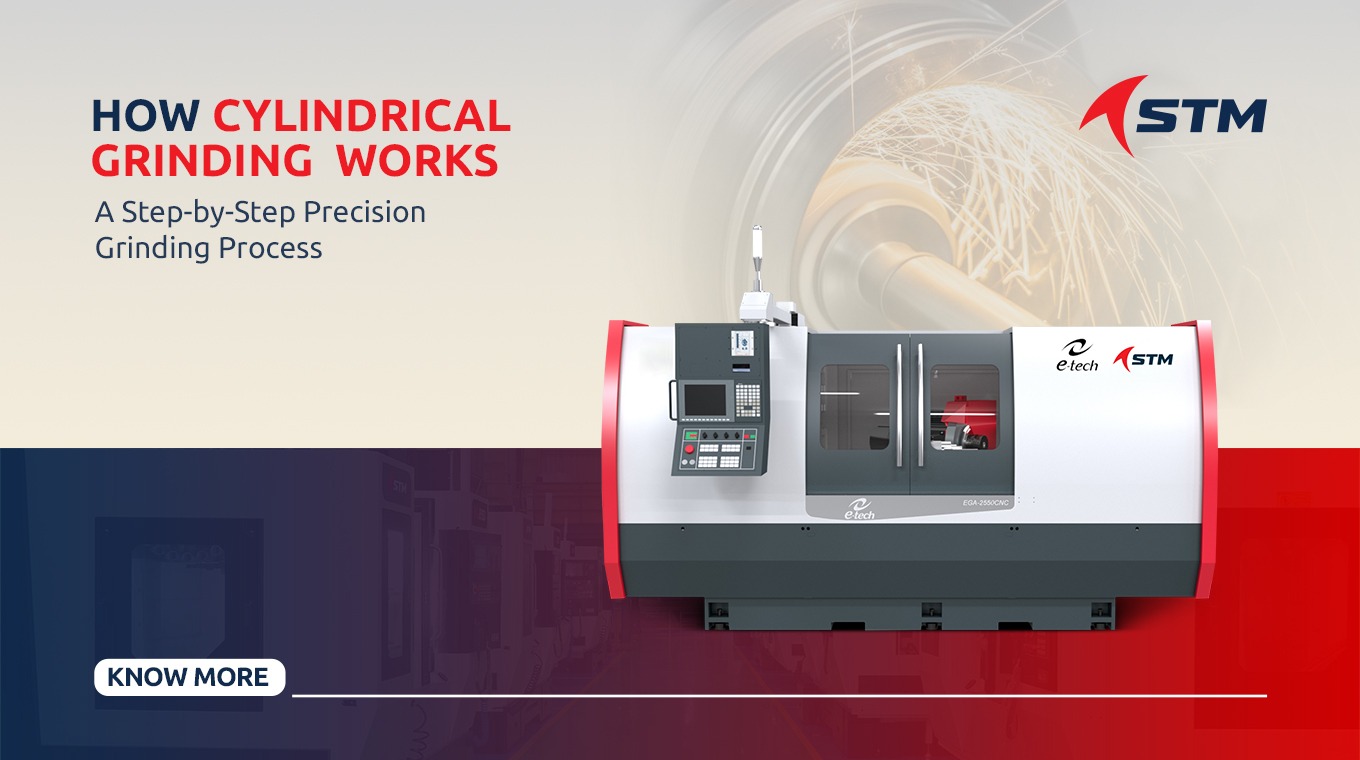
A cylindrical grinding machine is a precision grinding machine used to finish the external or internal surfaces of cylindrical workpieces. During the grinding process, the workpiece rotates while an abrasive grinding wheel removes a controlled amount of material to achieve the required diameter, roundness, and surface finish.
The process is widely used to manufacture precision components such as shafts, rollers, spindles, bushes, sleeves, bearing housings, and hydraulic parts, where accuracy and repeatability are essential.
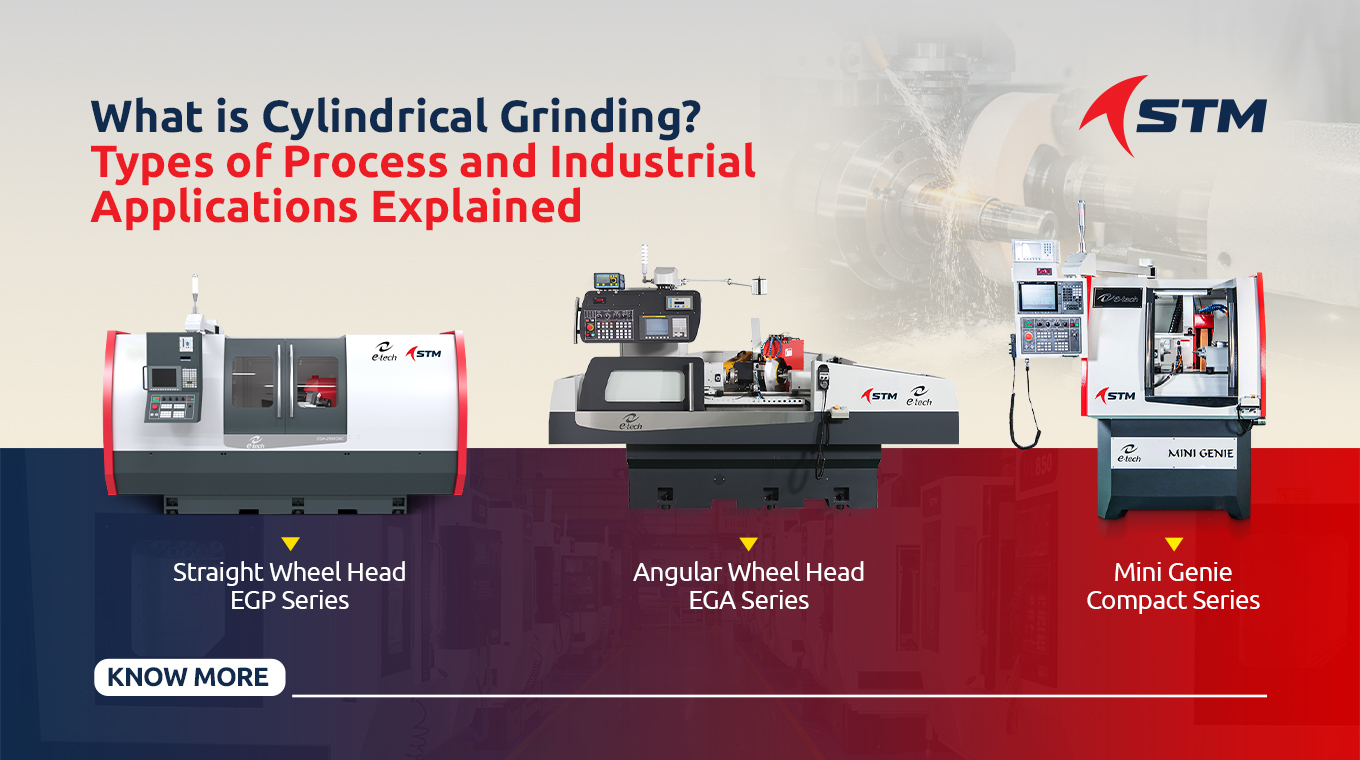
Types of Cylindrical Grinding Processes
Modern cylindrical grinding machines support different grinding methods based on the application and workpiece design.
External Diameter (OD) Grinding
OD Grinding machines the outer surfaces of cylindrical components such as shafts, rollers, and spindles. It ensures accurate diameters, excellent roundness, and a superior surface finish.
Internal Diameter (ID) Grinding
ID Grinding is used to machine the internal bore of cylindrical workpieces. It is ideal for bushes, sleeves, bearing housings, and hydraulic components requiring high internal accuracy.
Plunge Grinding
Plunge Grinding feeds the grinding wheel directly into the workpiece without axial movement. It is suitable for machining shoulders, grooves, and stepped profiles with high precision.
Centerless Grinding
Centerless Grinding enables continuous, high-volume production by grinding cylindrical parts without holding them between centers. It offers faster production, reduced setup time, and consistent machining quality.
Industries That Rely on Cylindrical Grinding
Precision cylindrical grinding is widely used in industries that demand reliable, high-performance components.
Common applications include:
- Automotive shafts and transmission components
- Aerospace engine and landing gear parts
- Hydraulic cylinders and piston rods
- Industrial rollers and machine spindles
- Precision tooling and mould components
- Heavy engineering and general manufacturing
Why Manufacturers Choose STM
At STM, we understand the importance of precision, productivity, and long-term reliability. STM cylindrical grinding machines are engineered with rigid construction and precision-focused performance to support a wide range of industrial grinding applications.
STM Advantages
- High-precision grinding performance
- Robust machine construction
- Consistent dimensional accuracy
- Excellent surface finish capability
- Suitable for diverse industrial applications
- Reliable engineering expertise and customer support
Frequently Asked Questions
What is a cylindrical grinding machine used for?
It is used to produce highly accurate cylindrical components with excellent dimensional accuracy and surface finish.
What is the difference between OD and ID grinding?
OD Grinding machines the outer diameter of a component, while ID Grinding finishes the internal bore or hole.
Which industries use cylindrical grinding machines?
Automotive, aerospace, heavy engineering, hydraulic equipment, machine tools, and precision engineering industries commonly rely on cylindrical grinding.
Why is cylindrical grinding important?
It improves dimensional accuracy, roundness, surface finish, and component life while ensuring consistent manufacturing quality and productivity.