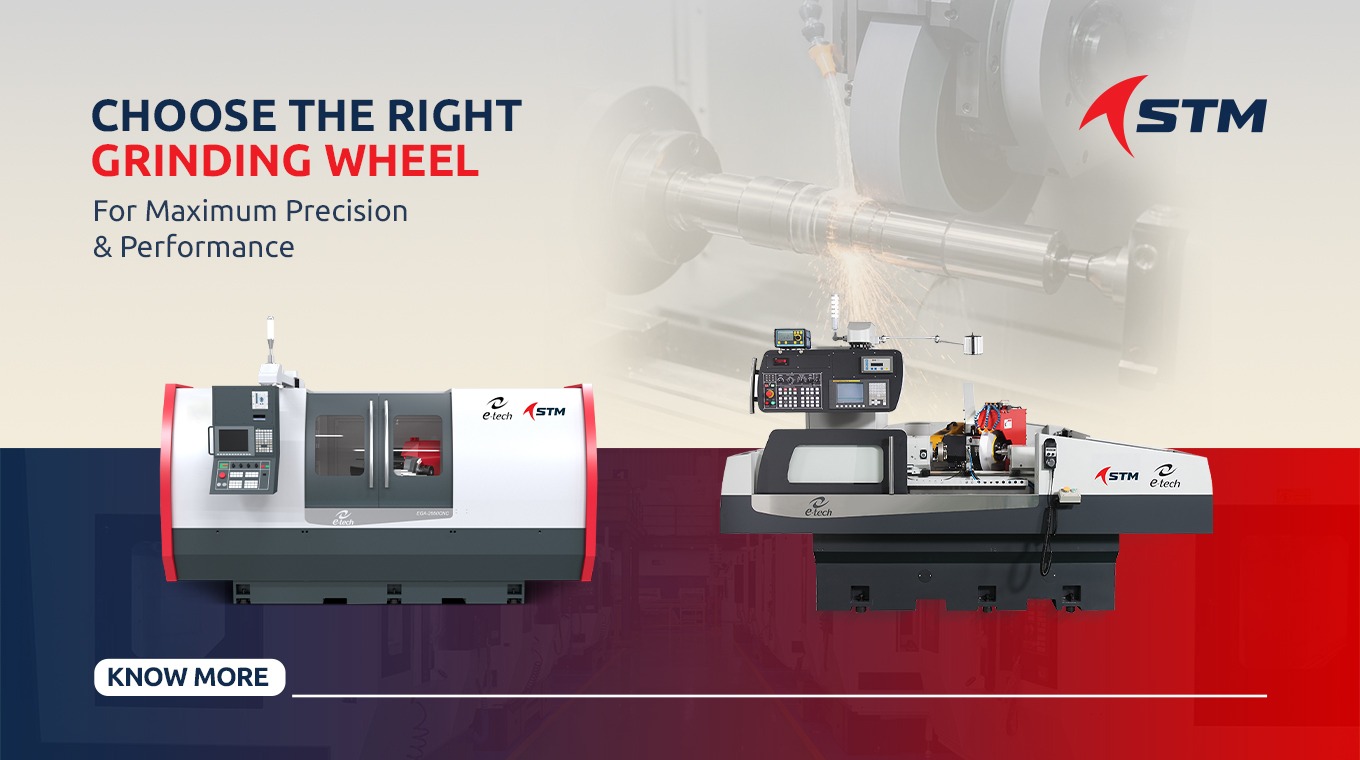
The performance of a cylindrical grinding machine depends not only on the machine itself but also on selecting the right grinding wheel. A properly chosen grinding wheel improves dimensional accuracy, surface finish, productivity, and wheel life, while an incorrect choice can lead to poor surface quality, excessive wheel wear, and higher production costs.
Understanding the key factors involved in grinding wheel selection helps manufacturers achieve consistent and efficient grinding results.
What is a Grinding Wheel?
A grinding wheel is a precision cutting tool made up of abrasive grains bonded together to remove material from a workpiece. Each abrasive grain acts as a tiny cutting edge, gradually removing small amounts of material to achieve the desired size and finish.
Grinding wheels are available in different materials, grain sizes, hardness levels, and bond types to suit various grinding applications.
Factors to Consider When Choosing a Grinding Wheel
Selecting the right grinding wheel depends on the workpiece material, application, and required finish.
1. Workpiece Material
The hardness and type of material determine the abrasive required.
- Aluminium Oxide – Ideal for steel and alloy steels
- Silicon Carbide – Suitable for cast iron and non-ferrous materials
- CBN - Best for hardened steels
- Diamond - Used for carbide and ceramic materials
2. Surface Finish Requirements
Fine-grit wheels produce smoother surface finishes, while coarse-grit wheels remove material faster and are better suited for rough grinding.
3. Wheel Hardness
Soft wheels are generally preferred for hard materials because they expose fresh abrasive grains more easily. Hard wheels perform well when grinding softer materials.
4. Bond Type
The bond holds the abrasive grains together and affects wheel strength, cutting performance, and heat generation. Vitrified bonds are commonly used in cylindrical grinding machines due to their rigidity and precision.
Common Grinding Wheel Problems
Using the wrong grinding wheel can affect machining quality and productivity.
Common issues include:
- Poor surface finish
- Excessive wheel wear
- Workpiece burning
- Chatter marks
- Reduced dimensional accuracy
Regular wheel dressing and selecting the correct wheel specification help prevent these problems.
Tips for Better Grinding Performance
To achieve consistent grinding results:
- Match the wheel to the workpiece material.
- Use the correct wheel speed and feed rate.
- Dress the grinding wheel regularly.
- Maintain proper coolant flow.
- Replace worn wheels when necessary.
These practices improve grinding efficiency, extend wheel life, and maintain machining accuracy.
STM Precision Grinding Solutions
At STM, precision and reliability are at the core of our grinding solutions. Our CNC cylindrical grinding machines are designed to work with a wide range of grinding wheel specifications, enabling manufacturers to achieve excellent surface finishes, tight tolerances, and consistent machining performance across diverse industrial applications.
Frequently Asked Questions
Why is grinding wheel selection important?
The right grinding wheel improves machining accuracy, surface finish, productivity, and tool life.
Which grinding wheel is best for hardened steel?
CBN grinding wheels are commonly preferred for hardened steel because of their durability and high grinding performance.
How often should a grinding wheel be dressed?
The frequency depends on the application and wheel wear, but regular dressing helps maintain cutting efficiency and surface quality.
Can one grinding wheel be used for every material?
No. Different materials require different abrasive types, grain sizes, and wheel specifications to achieve the best results.